Water, Sanitation and Hygiene (WASH) (Completed)

Community Action Group Meetings 960x640

To support community efforts aimed at addressing water, sanitation and hygiene (WASH) challenges, DAPP Zambia implemented the Child Aid WASH Project in Mwinilunga, Kasempa and Kalumbila districts of North Western Province from 2021 to 2024.

The project was anchored on community structures including Community Action Groups, Village-WASH Committees, Area Pump Menders, WASH Champions and School Peer Educators. These structures, along with the support of traditional leaders, have continued to promote and enforce the required WASH standards to sustain interventions beyond the lifespan of the project.

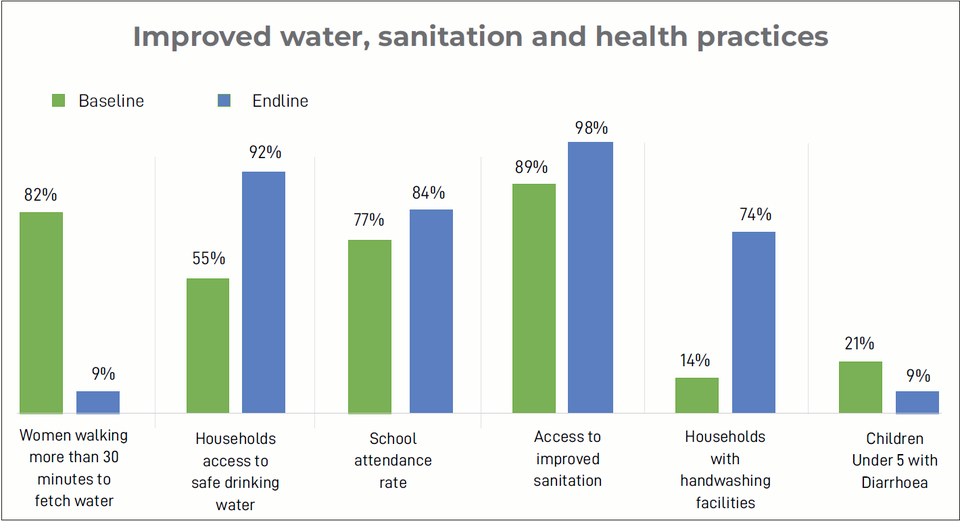
The end-of-project evaluation highlighted significant achievements, indicating that communities have started to embrace low-cost self-supply technologies such as manual drilling, rope pumps and solar pumps to improve access to water for domestic and productive use. Those who have invested in these technologies have water for domestic use at their own homes and water for irrigation, thereby increasing horticulture production throughout the year.

The evaluation indicated that the integrated approach successfully improved WASH, boosted local capacity and fostered sustainable community practices as demonstrated in the illustration below.

WASH 960x640

__________________________________________________

 KEY FIGURES

6,135 families  

150 Community Action Groups formed

100 Village-WASH Committees

200 School WASH Peer Educators

__________________________________________________

Project Full name: Water, Sanitation and Hygiene (WASH)

Principal Partner(s): Sign of Hope

Other Partner(s): Government Line Departments and Humana People to People

Location: Kalumbila, Mwinilunga and Kasempa districts of North-Western Province

Zambia Family South-Central (ZAMFAM SC) (Completed )

"Changing lives of vulnerable children and building livelihood resilience in their families"

The ZAMFAM South Central Project worked towards the improvement, care, and resilience of vulnerable populations while supporting HIV epidemic control in Zambia. Since its inception, the project accelerated children’s HIV/AIDS treatment initiatives, aimed at reducing new HIV infections in young women and men, and increased the number of children receiving treatment. It strengthened families and community structures such as Community Action Groups, Community Welfare Assistance Committees (CWACs), and Support Groups to improve the care of Orphans and Vulnerable Children (OVCs). The project also strengthened linkages between families, community structures, and government services.
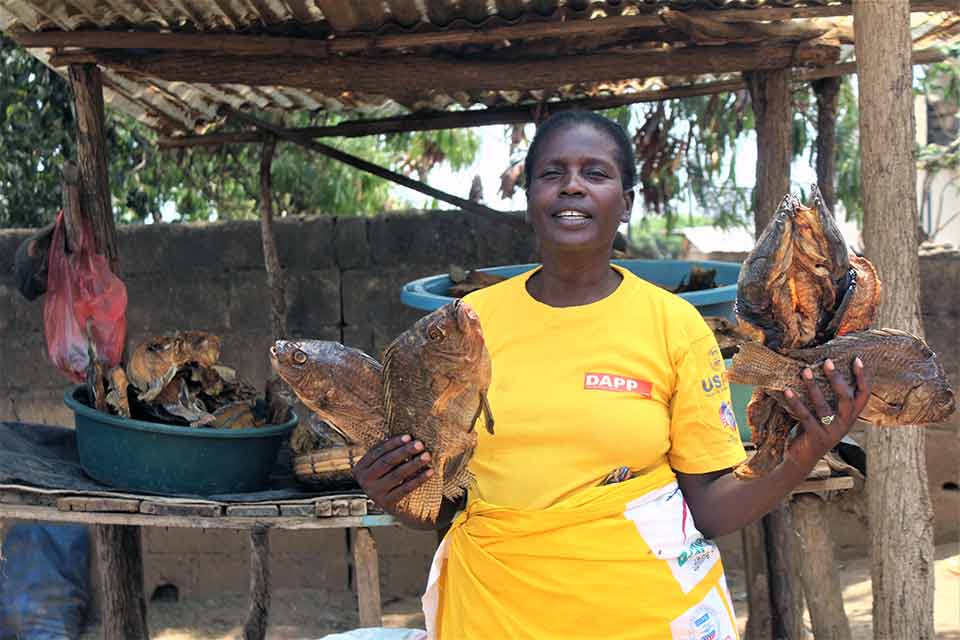
In 2019 the Project clocked 4 years of implementing its activities in 14 districts of Central and Southern Province of Zambia, with the main objective of supporting vulnerable children and adolescents infected with, affected by or vulnerable to HIV/AIDS and their families. The Activities focused on:

  1. increasing the resilience of households to care for their children
  2. improving the health and wellbeing of the 128,124 children enrolled in the project
  3. building the capacity of government and community structures to care for and support vulnerable children
  4. reduction of HIV infection among children and youths in the operation areas

A total of 363 project staff implemented the project with funding from USAID/ PEPFAR in cooperation with the Ministry of Community Development and Social Services, Ministry of Education and Ministry of Agriculture.

Each field staff was responsible for 500 Orphans and Vulnerable Children (OVC) and their families and they developed and updated case management plans with the aim of graduating the children and families at the end of the project.

They worked with the community structures in place, including the Community Action Groups, the Community Welfare Assistant Committees (CWACs) and In and Out of School Youth Clubs. They also worked with community volunteers such as the Child Care Volunteers (CCVs) and Community Health Workers (CHWs).

Families improved their resilience and strengthened their economy through the training and activities in 2,939 Action Groups, which included Internal Saving and Lending, Pass on Gift system of livestock and legumes, entrepreneurship and business training and linking to markets.

HIV prevention activities were carried out through In and Out of School Youth Clubs as well as condom distribution for sexually active adolescents and youths.

HIV adherence support was provided to 11,138 HIV positive children and youths, while a total of 17,255 children were supported with school fees through school block grants and 502 adolescents received vocational training.


Project Elements

Community Action Groups for Mutual Support
2,939 Community Action and Saving Groups were the foundation for results achieved in the ZAMFAM project in 2019. These groups consist of one representative from each of the benefiting families. The groups provided a platform for peer support, information and sharing of best practices, discussing and challenging each other to adopt healthy, sound and productive practices and members supported one another with internal saving and lending activities. The group members also met weekly for lessons and actions. Project staff met monthly with the group coordinators for review and planning.

Pass On Gifts for Economic Strengthening
29,788 families received pass-on-gifts through the ZAMFAM Project in 2019. The gifts consisted of goats, chickens and crop input mainly for legumes in rural communities including cash for income generating activities in urban communities. The pass-on gifts were accompanied with training and mentoring facilitated by project staff as well as government extension workers from the Ministry of Agriculture and Ministry of Community Development and Social Services. The families paid the gifts forward to other families in the Action Group through the Pass-on Loan Committees.

Adherence Support for HIV Positive Children and Adolescents
11,138 HIV positive children and adolescents were supported by ZAMFAM in 2019. They improved their viral load through monthly visits from assigned Community Health Workers, who provided treatment literacy and established and trained “Trios” - which is a buddy system consisting of the child/adolescent and two supporters (often the guardian and a neighbour). Project staff in cooperation with health facilities and NZP+ supported 209 Teen Clubs for HIV positive children and adolescents.

Children and Adolescents Knowing their HIV Status
The project carried out a comprehensive risk assessment to identify children, adolescents and youths who had been at risk of HIV since the last HIV screening and testing action. All the enrolled children and youths were assessed and those who had been at risk were tested.

Behaviour change activities were carried out through 426 In School and 289 Out of School Youth Clubs, training of Youth Champions to reach out to their peers and through establishment of condom outlets for easy access for adolescents and youths in need. 1,520,414 condoms were distributed using 328 condom outlets

DAPP Child Aid TCE

The OVC project improves the health and social wellbeing of vulnerable children infected with and, or affected by HIV, as well as reducing new HIV infections among children and adolescents.

OVC Project Article Picture 960x640

Individual Case Management: The family- centered program focuses on individual Case Management. The program offers services tailored to the child and caregiver’s individual needs, and it builds resilience of the family through improved production, marketing, establishment of saving groups among other activities.

Each family is assigned a Case Worker, who visits the family monthly to provide HIV adherence counselling, psychosocial support, screening for Sexual and Gender-based Violence and any other forms of child abuse. We also link those in need to specialised and community services.

The project has established teen clubs and trios, where HIV-positive individuals receive support from peers. Families are organised in Action Groups as a platform for guardians to learn and share experiences on how to care for their children.

The project works in 8 districts of Western and Eastern provinces. The project has improved treatment adherence and nutrition, leading to 98% of the children and adolecents living with HIV attaining viral load suppression. We also support HIV exposed infants through mother baby pair to reduce their risk of HIV transmission.

HIV prevention Programs:

Family Matters Program which focuses on strengthening family relationships and parenting skills. The project reached a total of 7,954 families;

No Means No which empowers adolescents girls (aged 10 – 14 years) to prevent sexual violence. The project reached a total of 10,947 girls to date;

Coaching Boys into Men which promotes positive masculinity and non-violence among male adolescents. The project reached a total of 17,018 boys to date.

_______________________________________________________

Project Fullname: The project is implemented under the Total Control of the Epidemic in 4 Provinces of Zambia through Strengthening Community- Based HIV Prevention and Response

Principal Partner(s): United States Centers for Disease Control and Prevention (CDC)

Other Partner(s): Ministry of Health, Humana People to People (HPP)

Location: 229 health facilities in 8 districts of Western (Kaoma, Mongu, Kaoma, Kalabo, Sesheke) and Eastern (Chipata, Katete, Petauke) provinces.

Project duration: Oct. 2020 to Sept. 2025

_______________________________________________

Key Achievements (July 2024)

  • 12,729 families enrolled
  • 38,956 OVCs enrolled of whom 5,324 are living with HIV, with 98% achieving viral suppression.
  • 1,228 community action groups formed.
  • 5,809 vulnerable children receiving school support
  • 3992 HIV exposed infants currently enrolled
 

Humana Rights in Correctional Facilities

DAPP Zambia, through the Human Rights in Correctional Facilities project, has since 2015 been contributing towards efforts of the Zambia Correctional Services to rehablilitate and reintergrate inmates into society to effectively contribute to social and economic growth.

HUMANR2

The project strengthens government response systems to enhance rehabilitation of inmates as a mechanism to ultimately reduce reoffending, help mitigate overcrowding in facilities, and restoring dignity for former inmates.

Currently, the project operates in two adult facilities in Northern Province supporting 875 inmates and in three Child Rehabiliation Centres in Southern and Copperbelt Provinces supporting 210 child  offenders.

Rehabilitation interventions in the facilties include forming peer support systems such as “trios” in mitigating health challenges among inmates, supporting skills, literacy and vocational skills training, as well as improving hygiene, water and sanitation facilities and nutrition through gardening.

In communities, reintegration involves engaging communities to raise awareness against stigma of former inmates, strengthening systems for victim reconciliation and establishing/ strengthening cooperatives for former inmates to support each after discharge. 

Between 2019 and 2023, the European Union funded these activities in 6 adult facilites in Southern, Central, Muchinga and Luapula provinces of Zambia.

The results from the project showed improved rehabilitation as key in reducing reoffending amonst former inmates as shown below:

GRAPHS2

________________________________________________

KEY FIGURES

  • 2,605 adults & 318 juveniles reached with services every year (2017 to date)
  • 26,896 community members reached
  • 32 cooperatives established, with 464 former inmates provided with transitional support.
  • 771 family/victim reconciliatory meetings
  • 794 inmates supported in vocational skills and academic learning.
  • 382 child offenders conveyed to rehabilitation centers.

________________________________________________

Project Fullname: Human Rights in Correctional Facilities

Principal Partner(s):  European Union (2019 – 2023) and the Child Welfare Fund

Other Partner(s): Government line ministries, Humana People to People (HPP)

Location: Kasama and Luwingu districts for adults. Kazungula (Katombora Reformatory School) Mazabuka (Nakambala Approved School) and Ndola (Insakwe Approved School)