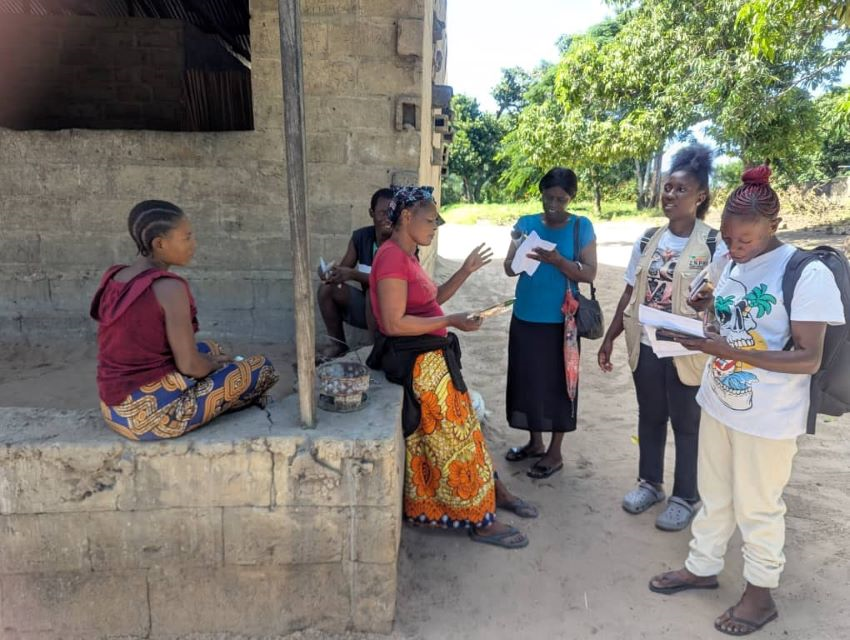
 Public health threats and disease outbreaks continue to pose a significant risk to communities, especially where early detection and reporting systems are weak. Delayed reporting can lead to rapid spread of diseases and increased pressure on health systems; hence, there is a need to strengthen community-based surveillance and timely response mechanisms.
The Zambia National Public Health Institute (ZNPHI), in partnership with the Development Aid from People to People (DAPP), is implementing a Pilot Joint Surveillance Project in Risk Communication and Community Engagement (RCCE). The project aims to strengthen community-level early detection, notification and rapid response to public health threats through Community-Based Volunteers (CBVs) aligned with Event-Based Surveillance systems.
The initiative is being implemented in eight high-priority districts with a total of 80 Community-Based Volunteers deployed to support active surveillance, reporting of public health signals, case referrals and risk communication activities.
Community engagement strategies include health sensitisation, rumor tracking, referral follow-ups and promotion of accurate health information to strengthen disease prevention and response at community level.
Key challenges affecting effective disease surveillance include delayed reporting, misinformation, weak community-health facility linkages and limited awareness on disease prevention.
Through this initiative, the project aims to ensure that at least 80% of community alerts are reported within 24 hours and that 70% of reported signals are verified within 72 hours.
Project Name: Total Control of Epidemics (TCE) Surveillance Project
Principal Partners:ZNPHI and DAPP Zambia
Other Partners: Community structures and district health authorities
Location: Chipata, Sinazongwe, Mongu, Mwinilunga, Mpika, Mpulungu, Kanyama and Mandevu in Lusaka District.
Period: 10 months (February 2026 to November 2026)