 Abram Kayongo of Kyangozhi Area of Kalumbila District has made a decisive break from charcoal burning—once his main source of income—to build a more reliable and environmentally friendly livelihood through farming.
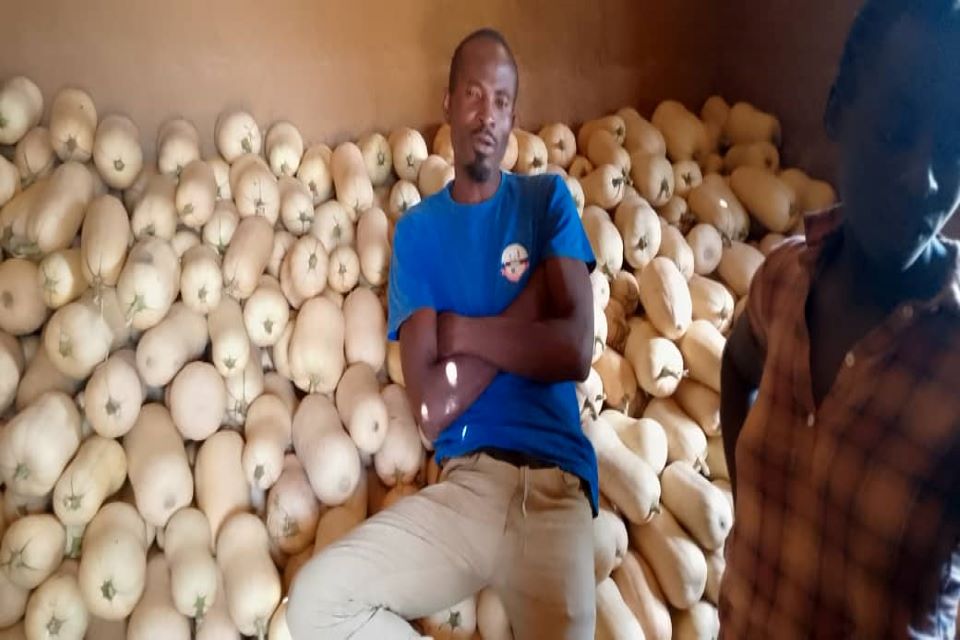
A small share from the collective sale of sweet corn and butternuts through his Farmers’ Club became the turning point. Abram received K1,000. Instead of spending it, he saw an opportunity to change direction.
“I decided to stop cutting trees for charcoal. When I received the money, I wanted to earn in a way that supports my family and protects the land. Through the savings group that I joined, I also borrowed a K1,500 to invest in tomato farming,” recalls Abram.
Armed with a capital of K2,500, Abram prepared his land, planted the seedlings, and cared for them with organic manure and other techniques that he learned under DAPP Zambia’s Alternative to Charcoal (A2C) Farmers’ Clubs project.
Six months later, Abram harvested and sold his tomatoes, earning about K24,000.
“For the first time, I was able to provide for my family without having to borrow. It made me feel proud and confident. And through the savings group, I have learnt how to save and plan so that I do not spend my money recklessly. I think about tomorrow, and I spend my money better now,” he added.
He has since reinvested about K6,000 into maize production, expanding his farm and fully transitioning away from charcoal burning.
“People are seeing what I am doing and want to learn. I know it may seem difficult at the beginning and requires patience, but farming has shown me it is possible to earn an income sustainably. I tell people that it starts with one step—use what you have wisely. With hard work and planning, you can support your family and protect the future,” he said.
In light of this year’s 𝐄𝐚𝐫𝐭𝐡 𝐃𝐚𝐲 commemoration slated for 22 April 2026, Abram’s story is a clear story that the planet has the power to provide food security when taken good care of.
DAPP Zambia implements the A2C project in Kalumbila and Solwezi Districts of North Western province, using the Farmers’ Clubs model to support 1,500 farmers, including 600 former charcoal producers to embrace sustainable income sources in agricultural value chains.