 Gerald Mainza, a teacher at DAPP Children’s Town, believes that learning should happen beyond the classroom. For him, education isn’t just about books and writing on the board; it’s also about helping students develop practical skills they can use every day. That’s why some of his lessons are held outside, where students work with the soil and see how food grows.
Gerald teaches Grade 10, a class of 18 learners. He has been teaching at the school for eight years. Over time, he noticed that many of his learners come from families who depend on farming. Because of this, he felt it was important for them to understand how to grow food and care for crops, just as their parents do at home.
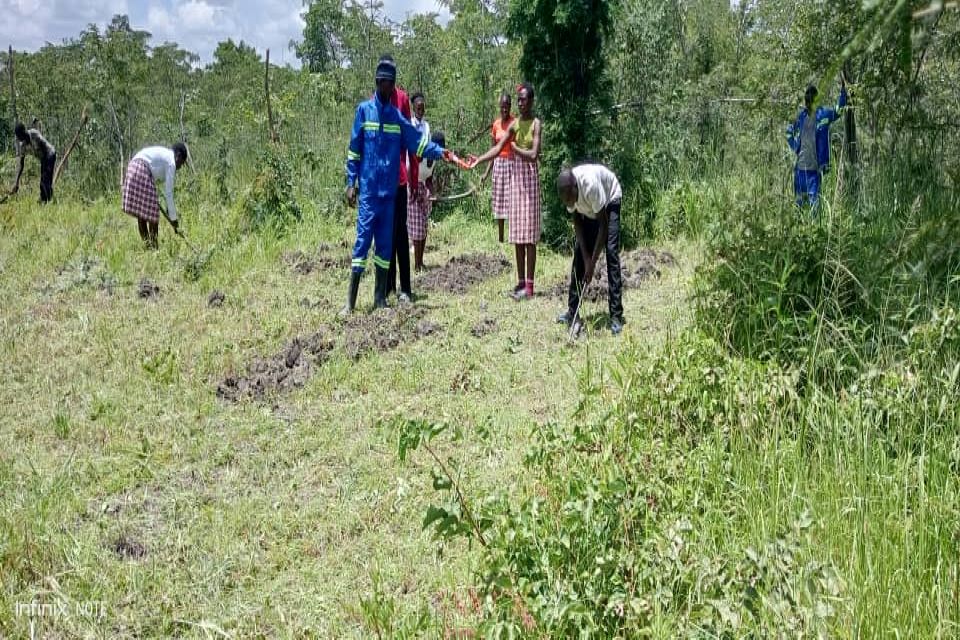
“I believe education should also teach practical skills,” Gerald explains. “Many of my learners come from farming families, so I wanted them to understand how to grow crops and manage a garden. One day, I told the class, ‘Let us start a garden together where we can grow okra and impwa (eggplants).’ I asked the learners to help plan it with me. Together we decided where to make the beds and how to share the work. We cleared the ground and prepared the planting beds as a class.”
Each learner was given two beds to care for. The class works together to water the plants, remove weeds, and check the crops. Through this work, learners gain experience in farming and understand the effort required to produce food.
The garden also supports the feeding programme at DAPP Children’s Town. The vegetables grown by the learners help provide food for the children at the school. Mount Meru also supports the feeding programme, which takes place three times a week on Monday, Wednesday, and Friday.
“When we harvest okra and impwa (eggplant), the vegetables go straight to the school kitchen so they can be cooked and shared with other learners. The learners know that the food they planted and cared for will not only stay in the garden. It becomes part of the meals prepared for the children at the school. When they see the vegetables being taken to the kitchen, they feel happy because they know their work is helping others,” Gerald says.
DAPP Children’s Town has 542 learners, from pre-school to Grade 12. Many of these children eat their meals at school each day. When the learners see the vegetables they planted being taken to the kitchen, they feel proud. They know their work is helping others.
“When we work in the garden, the learners are not only learning about plants. They are learning to work together and take responsibility. Each learner knows that the bed they are caring for depends on them. They also learn skills they can use at home with their families. I hope that what they learn here will help them not only at school, but also in their communities,” he added.